
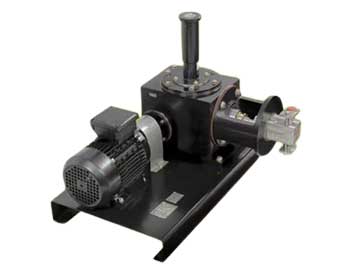
In modern industrial operations, efficient fluid handling is essential for maintaining productivity, process accuracy, and operational safety. Different industries require pumping solutions capable of handling liquids at varying flow rates, pressures, and operating conditions. Among the various pumping technologies available, a Reciprocating Pump is widely used for applications that demand accurate fluid delivery and high-pressure performance.
From chemical processing and water treatment to oil and gas industries, reciprocating pumps play an important role in transferring and metering liquids. Their positive displacement mechanism makes them suitable for applications where controlled flow and reliable pumping performance are essential.
In this blog, we will explore the working principle, types, advantages, and industrial applications of reciprocating pumps.
What Is a Reciprocating Pump?
A Reciprocating Pump is a type of positive displacement pump that moves liquid through the back-and-forth movement of a piston, plunger, or diaphragm inside a pumping chamber.
Unlike centrifugal pumps, which use rotating impellers to generate fluid movement, reciprocating pumps operate by trapping a specific volume of liquid and forcing it through the discharge pipeline.
These pumps are particularly suitable for applications requiring high discharge pressure, relatively low flow rates, and accurate liquid delivery.
Working Principle of a Reciprocating Pump
The working principle of a reciprocating pump is based on the reciprocating motion of a piston or plunger, which creates alternating suction and discharge strokes.
The pumping process generally involves two main stages:
1. Suction Stroke
During the suction stroke, the piston or plunger moves away from the pumping chamber, creating a vacuum or pressure reduction inside the cylinder.
As a result, the suction valve opens, allowing liquid to enter the pumping chamber from the supply tank or pipeline. The discharge valve remains closed during this stage.
2. Discharge Stroke
During the discharge stroke, the piston or plunger moves forward, increasing the pressure inside the pumping chamber.
This causes the suction valve to close and the discharge valve to open. The liquid is then pushed into the discharge pipeline at the required pressure.
These two strokes repeat continuously to provide fluid delivery.
The flow rate depends on factors such as pump displacement, stroke length, operating speed, and volumetric efficiency.
Types of Reciprocating Pumps
Reciprocating pumps are available in different designs depending on their construction, operating mechanism, and industrial requirements.
1. Piston Pump
A piston pump uses a piston that moves inside a cylinder to create suction and discharge pressure. It is commonly used in applications requiring high-pressure liquid delivery.
Applications:
High-pressure water systems
Industrial cleaning equipment
Hydraulic applications
Pressure testing systems
2. Plunger Pump
A plunger pump operates using a solid cylindrical plunger that moves through a sealing arrangement to pressurize the liquid. It is suitable for high-pressure applications and demanding industrial environments.
Applications:
Oil and gas industries
Chemical processing
Industrial water treatment
High-pressure fluid injection
3. Diaphragm Pump
A diaphragm pump uses a flexible diaphragm that moves back and forth to transfer liquid. Since the liquid is separated from the mechanical drive components by the diaphragm, this design is useful for handling certain corrosive, hazardous, or sensitive fluids when suitable materials are selected.
Applications:
Chemical dosing systems
Water treatment plants
Pharmaceutical manufacturing
Chemical processing industries
4. Single-Acting Reciprocating Pump
A single-acting pump delivers liquid during only one stroke of the piston or plunger. The suction and discharge processes occur alternately.
Applications:
Small-scale pumping systems
Water supply applications
General industrial fluid transfer
5. Double-Acting Reciprocating Pump
A double-acting pump uses both sides of the piston for pumping operations. Liquid is drawn into one side while being discharged from the other, allowing delivery during both directions of piston movement.
Applications:
Industrial water pumping
High-pressure fluid transfer
Process industries
Specialized industrial pumping systems
Industrial Applications of Reciprocating Pumps
Due to their ability to generate high pressure and deliver controlled liquid volumes, reciprocating pumps are used across several industries.
1. Chemical Processing Industry
Reciprocating pumps are used for transferring chemicals, additives, and process liquids where controlled delivery and chemical compatibility are important.
2. Water and Wastewater Treatment
These pumps support applications such as chemical injection, treatment chemical feeding, and other high-pressure fluid handling operations.
3. Oil and Gas Industry
In oil and gas operations, reciprocating pumps are used for high-pressure injection, fluid transfer, and selected process applications.
4. Pharmaceutical Industry
Certain reciprocating pump designs are suitable for controlled liquid handling in pharmaceutical manufacturing, depending on hygiene and material requirements.
5. Power Generation Plants
Power plants use reciprocating pumps in selected high-pressure water and chemical feeding applications.
6. Fertilizer and Manufacturing Industries
These pumps help deliver process chemicals and liquid additives at controlled rates during different manufacturing operations.
Advantages of Reciprocating Pumps
Reciprocating pumps offer several benefits that make them suitable for specialized industrial applications.
High-Pressure Performance: Capable of generating high discharge pressures compared with many conventional pumping technologies.
Accurate Liquid Delivery: Positive displacement operation supports controlled fluid delivery.
Suitable for Varying Applications: Available in different configurations to handle a wide range of liquids.
Good Metering Capability: Certain reciprocating pump designs provide precise chemical feeding and metering.
Flexible Design Options: Available with different materials, capacities, and pressure ratings.
Reliable Operation: Properly selected and maintained pumps can provide consistent performance in demanding industrial environments.
Factors to Consider When Selecting a Reciprocating Pump
Choosing the right reciprocating pump is important for achieving efficient operation and minimizing maintenance requirements.
Consider the following factors before selecting a pump:
Flow Rate: Determine the required liquid delivery capacity based on the process requirements.
Discharge Pressure: Select a pump capable of operating at the required pressure.
Liquid Properties: Evaluate viscosity, temperature, corrosiveness, and the presence of suspended particles.
Material Compatibility: Ensure that the pump head, valves, seals, and other wetted components are compatible with the fluid.
Operating Conditions: Consider continuous or intermittent operation and the surrounding environment.
Maintenance Requirements: Evaluate the availability of spare parts and ease of servicing.
Application Requirements: Select the appropriate piston, plunger, or diaphragm configuration based on the process.
Consulting an experienced pump manufacturer can help you identify the right model for your specific industrial application.
Reciprocating Pump vs. Centrifugal Pump
Both reciprocating and centrifugal pumps are widely used in industrial applications, but they operate differently.
| Parameter | Reciprocating Pump | Centrifugal Pump |
|---|---|---|
| Working Principle | Positive displacement | Centrifugal force |
| Flow Characteristics | Pulsating flow | Generally continuous flow |
| Pressure Capability | Suitable for high-pressure applications | Commonly used for low to moderate pressure, with high-pressure designs also available |
| Flow Rate | Generally low to moderate | Low to very high |
| Metering Accuracy | Suitable for accurate metering in appropriate designs | Generally not preferred for precision metering |
| Common Applications | Chemical dosing, injection, high-pressure transfer | Water supply, circulation, general fluid transfer |
The right choice depends on the required flow rate, operating pressure, fluid properties, and process conditions.
Why Choose a Reliable Reciprocating Pump Manufacturer?
Selecting a dependable manufacturer is essential for obtaining a pump that meets industrial performance and safety requirements.
An experienced manufacturer can provide application-specific recommendations, suitable material selection, customized configurations, quality testing, and technical support.
Unique Dosing Systems Pvt. Ltd. offers industrial dosing and metering pump solutions for a variety of chemical handling and process applications. With a focus on engineering quality and application requirements, selecting the right pumping solution can help industries improve process efficiency and maintain reliable operations.
Conclusion
A Reciprocating Pump is an important positive displacement pumping solution for industries requiring high-pressure fluid delivery and controlled liquid movement. Its working principle, different pump configurations, and wide range of applications make it suitable for chemical processing, water treatment, oil and gas, pharmaceuticals, and other industrial sectors.
Understanding the different types, operating mechanisms, and selection criteria helps industries choose the right pump for their requirements.
For efficient and dependable industrial fluid handling, selecting a suitable reciprocating pump from an experienced manufacturer is an important step toward achieving consistent process performance.